
Creating valuable blog content takes time, research, and planning. Businesses spend hours writing articles that answer customer questions, explain products, and share useful information. However, once a blog post is published, it often remains limited to the website.
The same information could reach more people through videos, social media clips, and visual stories.
Content repurposing helps businesses make better use of their existing articles. Instead of starting from scratch, marketers can turn written content into engaging videos for YouTube, Instagram, LinkedIn, and other platforms.
With AI-powered video creation tools, this process has become easier. Businesses can transform blog ideas into scripts, generate visuals, add narration, and prepare videos without handling every production task manually.
What Is Blog-to-Video Content Repurposing?
Blog-to-video content repurposing is the process of converting written articles into video content while keeping the original message.
Instead of reading an entire article aloud, marketers select the most useful information and present it through visuals, narration, text, and storytelling.
A detailed blog about digital marketing strategies could become a short educational video covering five practical tips.
Businesses can repurpose different types of content, including:
- How-to guides into tutorial videos.
- Product articles into promotional explainers.
- Industry reports into short visual summaries.
- FAQ articles into educational social media clips.
- Customer success stories into video narratives.
The goal is to present existing information in a format that works for audiences who prefer watching rather than reading.
Why Should Businesses Turn Blog Posts Into Videos?
1. Reach Audiences Across Different Platforms
People consume information differently. Some prefer reading detailed articles, while others enjoy watching short videos.
Repurposing blog content allows businesses to reach both audiences without developing completely separate topics.
A single article can support a YouTube explainer, an Instagram Reel, and a short LinkedIn video.
This approach also aligns with the growing importance of AI and multi-platform marketing discussed in Hooks Tech's article on digital marketing trends in 2026.
2. Make Complex Information Easier to Understand
Some topics are difficult to explain through written content alone.
Videos can combine narration, graphics, examples, and visual demonstrations to make information clearer.
A blog about website optimization, for instance, could become a short video explaining page speed, mobile usability, and SEO through simple visuals.
3. Get More Value From Existing Content
A well-researched article can support several content formats.
Rather than creating new topics for every social media post, marketing teams can revisit their existing blogs and identify information worth sharing again.
This reduces repetitive research and helps maintain consistent messaging across channels.
How to Turn a Blog Post Into an Engaging Video
A clear workflow helps businesses turn written articles into videos without losing the original message.
Step 1: Choose a Blog With a Clear Message
Start with an article that answers a common customer question or explains a useful concept.
How-to guides, educational articles, and product explanations usually provide good starting points.
Avoid selecting content simply because it is long. The topic should also make sense in a visual format.
Step 2: Extract the Most Important Points
A video does not need to include every paragraph from the original article.
Identify the main message, supporting points, and a suitable conclusion.
For a blog covering seven marketing tips, a short video might focus on the three most useful ideas.
Step 3: Turn the Information Into a Video Script
Rewrite the selected points into short, conversational sentences.
A good script should introduce the topic, explain the main ideas, and give viewers a clear takeaway.
AI tools can help prepare an initial script, but marketers should review it for accuracy and flow.
Step 4: Plan the Visuals and Narration
Decide which scenes, graphics, demonstrations, or animations can support the script.
A video about e-commerce marketing might include product visuals, website demonstrations, and simple graphics explaining customer behavior.
Clear instructions help AI tools understand the intended video style. Hooks Tech's guide to prompt engineering for digital marketing offers useful advice on writing more effective AI instructions.
Step 5: Edit and Prepare the Video
Review the generated scenes, narration, captions, and transitions.
Remove unnecessary details and make sure the video communicates one clear message.
Prepare suitable versions for different platforms before publishing.
Best AI Tools for Turning Blog Content Into Videos
AI-powered platforms can simplify different parts of the repurposing process. Here are three tools that help businesses transform written content into video stories.
1. Invideo
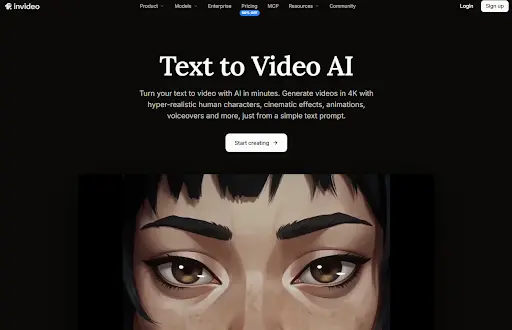
Invideo helps businesses and content creators turn written ideas, scripts, and marketing briefs into engaging videos. It is particularly useful for repurposing blog content into educational explainers, promotional videos, and social media stories without traditional filming.
With invideo's text to video capabilities, users can describe the scenes, characters, movement, and visual style they want. The platform can generate video scenes, visuals, voiceovers, music, and edits based on these instructions. It also provides access to AI models such as Seedance 2.5, Gemini Omni Flash, Veo 3.1, Kling, and MiniMax, supporting different creative styles, realistic motion, and cinematic video generation, including output options up to 4K.
For marketers repurposing written content, invideo offers scriptwriting assistance and storyboarding tools to plan scenes before production. Users can also upload scripts or creative briefs to AI editing agents, which help generate clips and arrange them into an editable timeline.
The platform includes a timeline editor for refining scenes, adjusting the flow, and making changes to the video. Its multiplayer editing features also allow team members to collaborate in real time.
Beyond educational videos, invideo supports product advertisements, UGC-style videos, branded content, and realistic AI avatars for explainers and storytelling.
These features make invideo a useful choice for marketing teams that want to turn existing articles into visually engaging videos while maintaining control over the creative process.
Best for: Businesses, bloggers, and marketing teams creating AI-generated explainers, promotional videos, and social media content from written ideas.
2. Pictory

Pictory is an AI-powered video creation platform designed to turn written content into videos. It is particularly useful for marketers who want to repurpose existing blog posts, articles, and educational material.
Users can paste a public blog URL into Pictory and choose the intended video format, platform, and length. The platform analyzes the article, identifies important information, and prepares a video script.
After reviewing the script, users can generate a video with scenes, visuals, narration, and captions. The editor allows marketers to change scenes, replace visuals, and adjust the final presentation.
Pictory also supports AI voiceovers, branded content, and automatic captions. Its brand features help businesses maintain consistent colors, fonts, and logos across their videos.
The platform can also generate or add supporting visuals when the original article does not contain enough suitable images.
For businesses publishing educational articles regularly, Pictory offers a direct way to turn existing written content into videos.
Best for: Bloggers, content marketers, and businesses converting published articles into educational and social media videos.
3. Lumen5
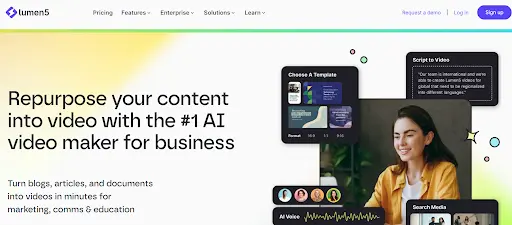
Lumen5 is an AI-powered video creation platform that helps businesses transform articles, blog posts, and other written materials into visual stories.
Users can paste a blog URL, upload a PDF, or add written content directly. The platform analyzes the information and prepares script options based on the key messages.
Its AI Script Composer helps marketers explore different storytelling approaches before generating the video.
Lumen5 can combine the selected script with suitable media, scene timing, and motion to create an initial video draft. Users can then change backgrounds, text, graphics, and other visual elements.
The platform also supports AI voiceovers, brand customization, and different aspect ratios for social media publishing.
Businesses can adjust the narration style, add branding, and prepare versions for different audiences without rebuilding the video from scratch.
Lumen5 is especially useful for marketing teams that regularly publish long-form content and want to turn important information into short, engaging videos.
Best for: Content marketing teams, businesses, and agencies repurposing articles, reports, and educational material into branded videos.
How to Get Better Results From Blog-to-Video Content
Turning an article into a video requires more than copying text into a video generator.
Keep the Story Focused
Choose one main message instead of trying to cover the entire article.
Short videos usually work better when viewers can understand the topic without needing additional context.
Adapt the Video to Each Platform
A detailed YouTube explainer may need a different structure from a short Instagram Reel.
Adjust the video length, pacing, captions, and format according to where it will be published.
Maintain Brand Consistency
Keep colors, logos, fonts, and communication style consistent across your visual content.
This helps audiences recognize the business even when its content appears on different platforms.
Track Content Performance
Measure views, watch time, engagement, clicks, and conversions to understand which videos resonate with your audience.
Businesses promoting videos through paid campaigns can also explore Hooks Tech's guide on PPC marketing for small businesses to better understand advertising and lead generation.
Common Mistakes to Avoid When Repurposing Blogs
One common mistake is copying an entire article into a video without adjusting the language.
Written content often contains longer explanations that do not work well as spoken narration.
Another mistake is adding visuals that look attractive but do not support the message.
Marketers should also avoid publishing AI-generated videos without checking factual accuracy, brand details, captions, and audio quality.
The most effective videos are not simply shorter versions of articles. They are carefully adapted stories designed for viewers.
Conclusion
Blog-to-video content repurposing allows businesses to reach more people without creating every piece of content from scratch.
By selecting useful information, preparing a clear script, and adding relevant visuals, marketers can transform existing articles into engaging video stories.
Tools such as invideo, Pictory, and Lumen5 make different parts of this process easier. With a thoughtful workflow and careful editing, businesses can extend the value of their blog content while maintaining a consistent message across marketing channels.
Looking to build an authoritative, high-converting digital presence? As a dedicated Digital Marketing Company in Madurai serving ambitious brands across Tamil Nadu and India, Hooks Tech blends strategic SEO, paid performance advertising, and modern web engineering to drive measurable business growth.
Frequently Asked Questions
Stay Updated
Get the latest AI marketing playbooks and visual design trends delivered straight to your inbox.
Related Playbooks
Scale Your Video Marketing
Want to repurpose your high-performing blog content into lead-generating social videos?
Get Free Strategy Call